
The File Format That Never Raises Its Voice
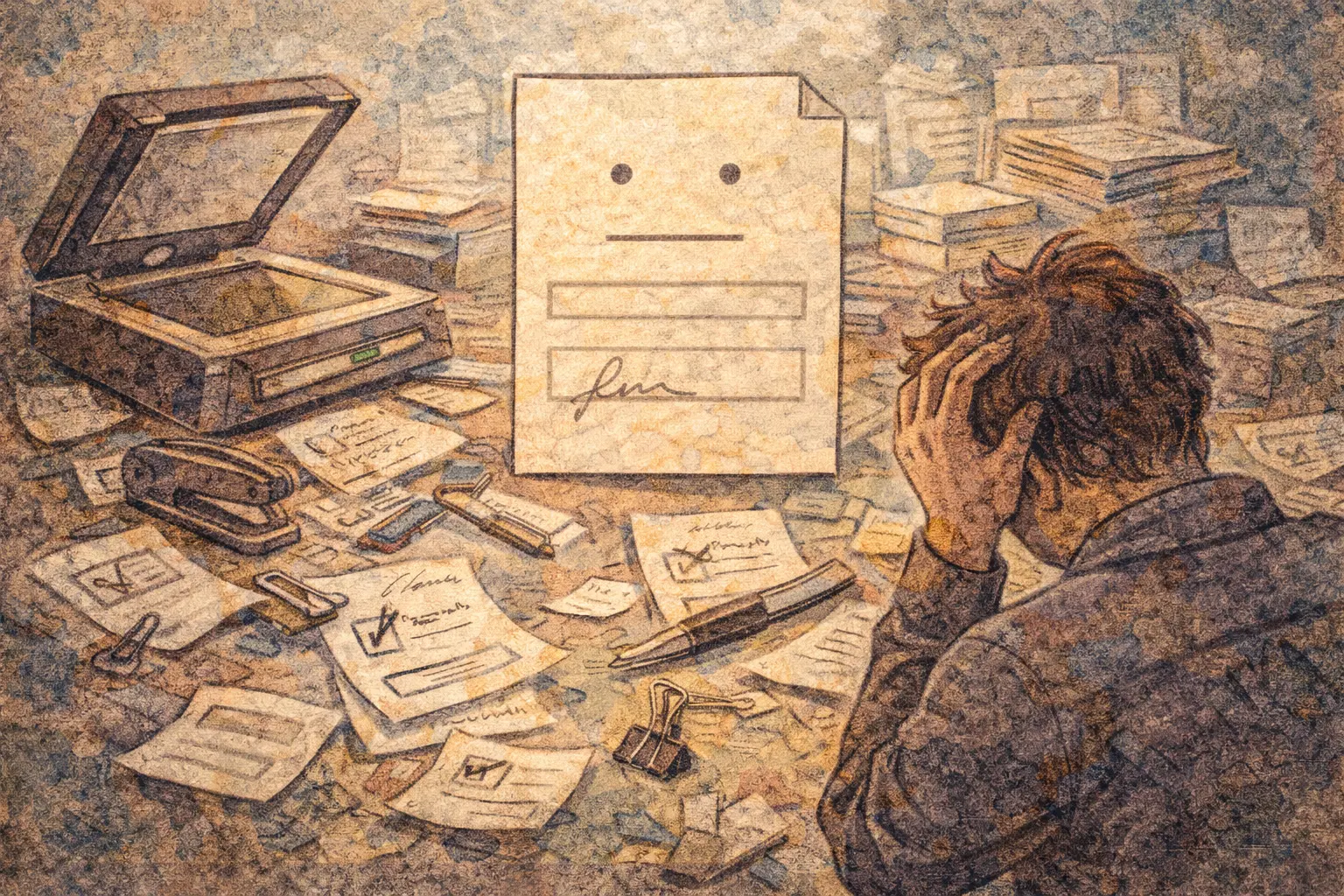
Nobody fears a PDF when it first arrives. That is part of its power. It shows up as a calm little attachment, a respectable gray icon, a format with the manners of a librarian and the soul of a county office waiting room. It does not look aggressive. It looks official.
Then you open it and realize the next forty minutes of your life now belong to a document that cannot be edited easily, prints weirdly, saves strangely, resists signatures, ignores your layout, and somehow weighs more emotionally than the thing it actually contains.
That is why PDFs became humanity’s quietest enemy. They do not crash dramatically or scream for attention. They simply stand between people and the one basic task they were trying to finish, then force everybody to bicker with margins, permissions, form fields, downloads, scanners, and whether “fill and sign” means what a normal human thinks it means.
Quick Take
- Core claim: PDF files became the quiet enemy of ordinary life because they look simple while making basic document tasks harder than they should be.
- What people usually get wrong: They blame the user for struggling, when the real issue is that PDFs freeze a document at the exact point people often still need flexibility.
- Why it matters: PDFs shape work, school, government forms, healthcare paperwork, invoices, contracts, resumes, receipts, and all the small official chores that already feel fragile.
- Who this affects: Anyone who has ever needed to sign, merge, compress, print, upload, scan, highlight, or edit a document without losing the will to continue.
- Reality check: PDF is useful, stable, and widely accepted. That is exactly why it has had so much time to become a problem.
PDFs Feel Harmless Until They Block Your Whole Afternoon
The official story is flattering. PDF stands for consistency. It preserves layout. It looks the same across devices. It protects formatting. It keeps documents tidy and professional. All of that is true, and all of it has helped create one of the most quietly maddening formats in public life.
The myth people keep repeating
- PDFs are easy because everyone already uses them.
- If a PDF is hard to work with, the user probably clicked the wrong thing.
- A stable file format should feel convenient by default.
What the article argues instead
PDFs are easy to receive and hard to finish. That is the key difference. They are excellent at presenting a document and weirdly hostile to the normal human urge to do something with it. A PDF says, “Here is the file exactly as intended.” A normal person says, “Great, now I need to sign page three, delete page four, fix one typo, send it back, and make sure it uploads under 5 MB.”
That is where the enemy energy begins. The PDF was built for preservation, not graceful cooperation. So it keeps its shape while you start inventing side quests. Convert it to Word. Print it and scan it back. Use a browser tool. Use another tool because the first one moved the text boxes sideways. Flatten it. Compress it. Re-save it. Rename it. Re-upload it. Discover the portal rejected it anyway.
This is why PDFs do not feel like files. They feel like process traps. The document itself may be three pages long, but the administrative atmosphere around it can swallow an entire lunch break.
The Format Won by Being Useful and Emotionally Inconvenient
The reason PDFs became so dominant is not hard to understand. They solved a real problem. They made documents look consistent. That mattered for contracts, forms, brochures, invoices, manuals, resumes, and anything else where layout was not decorative but functional. No one wanted a file that looked polished on one computer and deranged on another.
That victory gave PDF enormous institutional power. Once schools, offices, agencies, and businesses settled on it, the format became less of a choice and more of a climate.
Why the dominance stuck
- It preserves visual order better than many editable formats.
- It signals professionalism, seriousness, and “officialness.”
- It travels well between devices and people.
- It lets organizations hand you a document without granting you much control over it.
That last point is the quiet knife. PDF became beloved by institutions for many good reasons and one emotionally devastating one, it helps the sender more than the receiver. The sender gets stability. The receiver gets homework.
Strong examples that explain the hatred
- A school form arrives as a PDF with blank fields that do not actually accept typing correctly on mobile.
- A medical office sends intake paperwork as a PDF that technically supports signatures but somehow not in the app you already have.
- A job application requires one combined PDF under a size limit that feels specifically designed to cause panic.
- A utility company posts bills as PDFs that are viewable, downloadable, printable, and still weirdly harder to skim than plain text.
- A landlord sends a lease as a PDF that must be signed, initialed, and returned through a portal that behaves like a suspicious drawer.
None of this is loud. That is what makes PDF misery so durable. It rarely becomes a full disaster. It just creates enough friction to turn one small adult task into an evening mood.
The Real Problem Is the Gap Between Seeing and Doing
This is where PDF becomes such a perfect quiet enemy. Looking at a PDF usually works fine. Doing anything useful to it is where the format begins revealing its values. It loves display. It respects appearance. It does not naturally love your need to tweak, rearrange, or respond.
Why the experience feels so hostile
- A PDF can be opened almost anywhere, but not every viewer lets you do the same things.
- What looks editable is often not actually editable.
- Form fields behave inconsistently depending on app, browser, and device.
- Printing and re-scanning remain weirdly common, which is embarrassing for everybody involved.
- Compression, merging, and signing often require extra tools, extra steps, or extra patience you did not budget.
That gap between seeing and doing is what creates the emotional damage. People are lulled into a false sense of progress. The file opened. Great. The text looks clean. Great. Then the real task begins and suddenly the document transforms into a bureaucratic escape room.
The trade-off people keep feeling
- The document looks finished.
- Your task is not finished.
- The format protects appearance.
- You need cooperation, not appearance.
This is why PDF problems feel so irritatingly low-drama. The file is right there. The answer is supposedly right there. Yet something about it keeps you from moving cleanly from intention to completion. It is like being handed a locked transparent box. Nothing is missing, but nothing is easy either.
PDFs Became Bureaucracy’s Favorite Disguise
That is the final trick. PDFs do not feel evil on their own. They feel official. They borrow authority from neat margins, stable pages, and the visual tone of serious business. That makes people tolerate more friction than they should. If the exact same obstacles came from a loud, messy file format, everyone would revolt.
But PDF dresses inconvenience in respectable clothes. It makes bureaucracy feel orderly even when the experience is clumsy. Need to fill this out, sign this, combine that, then upload it in the correct orientation? The PDF will not yell. It will simply sit there with the expression of a form that knows resistance is useless.
That is why PDF became the quiet enemy instead of the obvious one. It does not produce chaos in a cinematic way. It produces chores. It extends tasks by seven minutes, fifteen minutes, forty minutes, and eventually one strange lifetime of clicking “save as” with growing bitterness.
The format is not evil. It is worse than evil. It is entrenched. It is useful enough to survive, inconvenient enough to annoy, and official enough to keep winning. It became the chosen language of paperwork because it preserves control, preserves layout, and preserves the exact emotional distance institutions seem to prefer.
So yes, PDF files became humanity’s quietest enemy. Not because they fail loudly, but because they succeed in the most exhausting possible way.
They arrive calm, look respectable, and then make one normal person whisper, “Why is this so hard,” into the middle of a perfectly ordinary day.
Common Questions
Q1. Why do PDF files feel harder to work with than regular documents?
Because they are designed to preserve layout, not to invite flexible editing. They are good at staying the same and awkward at helping people finish tasks.
Q2. Why are PDFs still used everywhere if they annoy so many people?
Because they solve a real need for stable formatting across devices and platforms. Institutions keep choosing reliability of appearance over convenience of interaction.
Q3. Why does signing a PDF still feel weirdly complicated?
Because the file may open easily while the tools for signing, editing, or saving behave differently depending on the device, app, browser, or portal involved.
Q4. What makes PDF frustration feel so specific?
It is the combination of calm presentation and hidden resistance. A PDF rarely looks broken. It just quietly adds work until a simple task stops feeling simple.



0 Comments